

Our Latest News & Updates
What to Expect From a Commercial Boiler Replacement
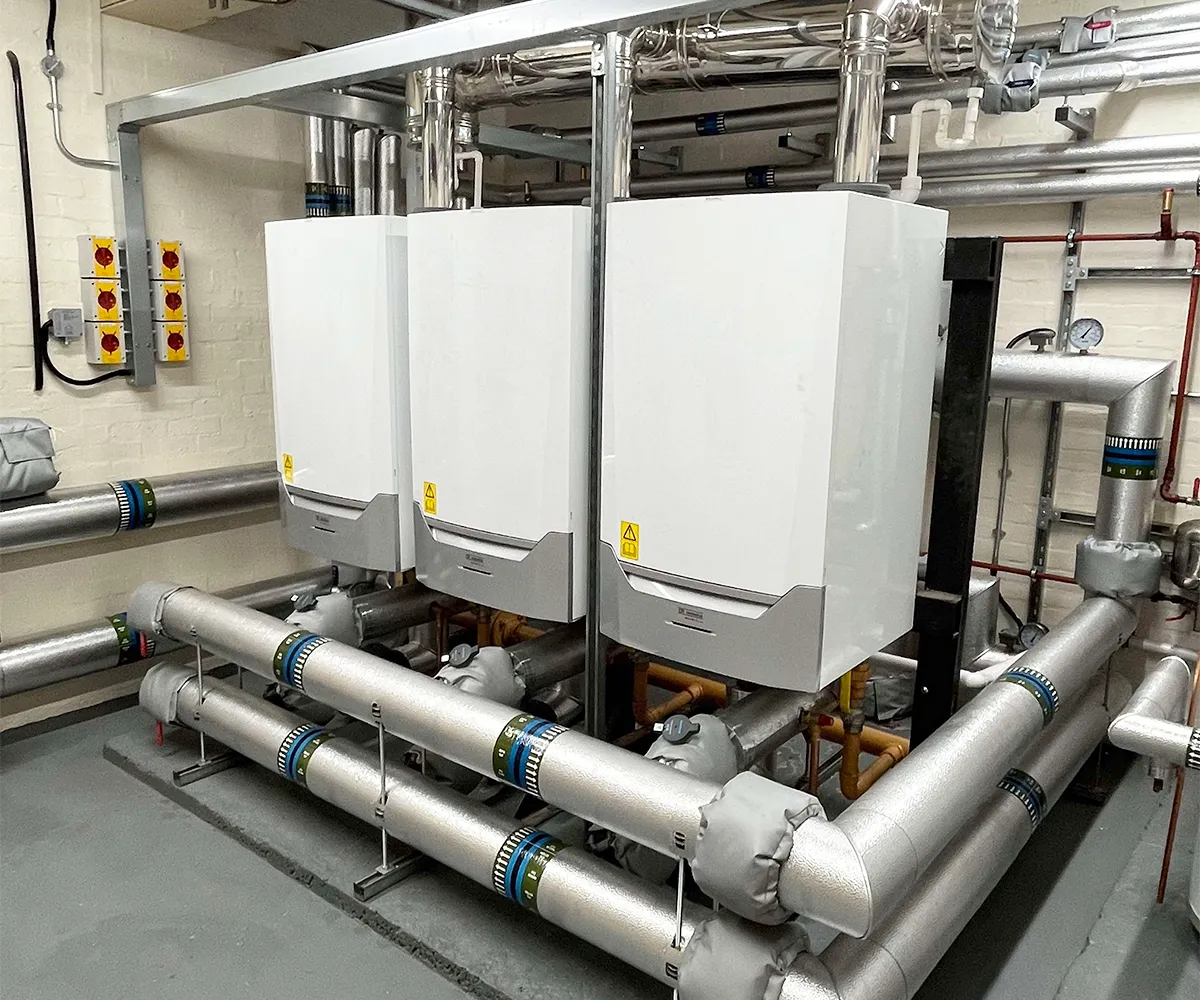
Replacing the boilers in a school, church or commercial building is a big job, but it does not have to be a disruptive one. Most of the problems people worry about, like cold buildings, missed deadlines and surprise costs, come from poor planning rather than from the work itself.
Here is how a commercial boiler replacement usually runs, and what you can do to make it go smoothly.
1. The survey
Every good replacement starts with a proper look at what is there now. We check the existing boilers and their output, the flue route, the pumps, controls and pipework, the gas or oil supply, and how the plant room is accessed.
It is also the time to ask whether the old boilers were the right size in the first place. Many older plant rooms were oversized, and a like-for-like swap can lock in years of wasted fuel.
2. Design and quotation
From the survey we put together a design and a fixed scope of work. That covers the new boilers, any changes to the flue, pumps and controls, and how the new plant will connect into the existing system.
This is also where we agree a programme. In a school that usually means the summer holidays or another planned shutdown. In a church it means working around services, weddings and funerals.
3. Keeping the building warm
If the work has to happen while the building is in use, or the old plant fails before the replacement is ready, a temporary boiler can carry the heating and hot water in the meantime. Our sister company, Boiler Hire UK, supplies temporary boilers from 90kW to 600kW, so the replacement can be done properly rather than rushed. You can read more on our temporary boiler hire page.
4. Strip out and installation
The old boilers come out, the plant room is prepared, and the new boilers, flues, pumps and controls go in. On a well planned job this stage holds few surprises, because the survey has already found most of them.
Modern condensing boilers are much smaller than the plant they replace, which often frees up space in the plant room and makes access for future servicing easier.
5. Commissioning and handover
Once installed, the system is filled, tested and commissioned. Controls are set up around how the building is actually used, and we walk the site team through how everything works. You should come away with the paperwork, the warranty details and a clear idea of the servicing schedule.
Real examples
We recently replaced the entire plant room at a school, rebuilding it from the ground up with modern high-efficiency boilers. You can read about it in our school boiler room case study. For a low carbon example, see how we moved Blackley Crematorium from gas boilers to heat pumps while keeping the site running.
Planning a replacement?
If your boilers are getting old, the best time to plan a replacement is before they fail. Get in touch and we can arrange a survey and talk you through the options.
