

Our Latest News & Updates
Is Your Building Ready for a Heat Pump?
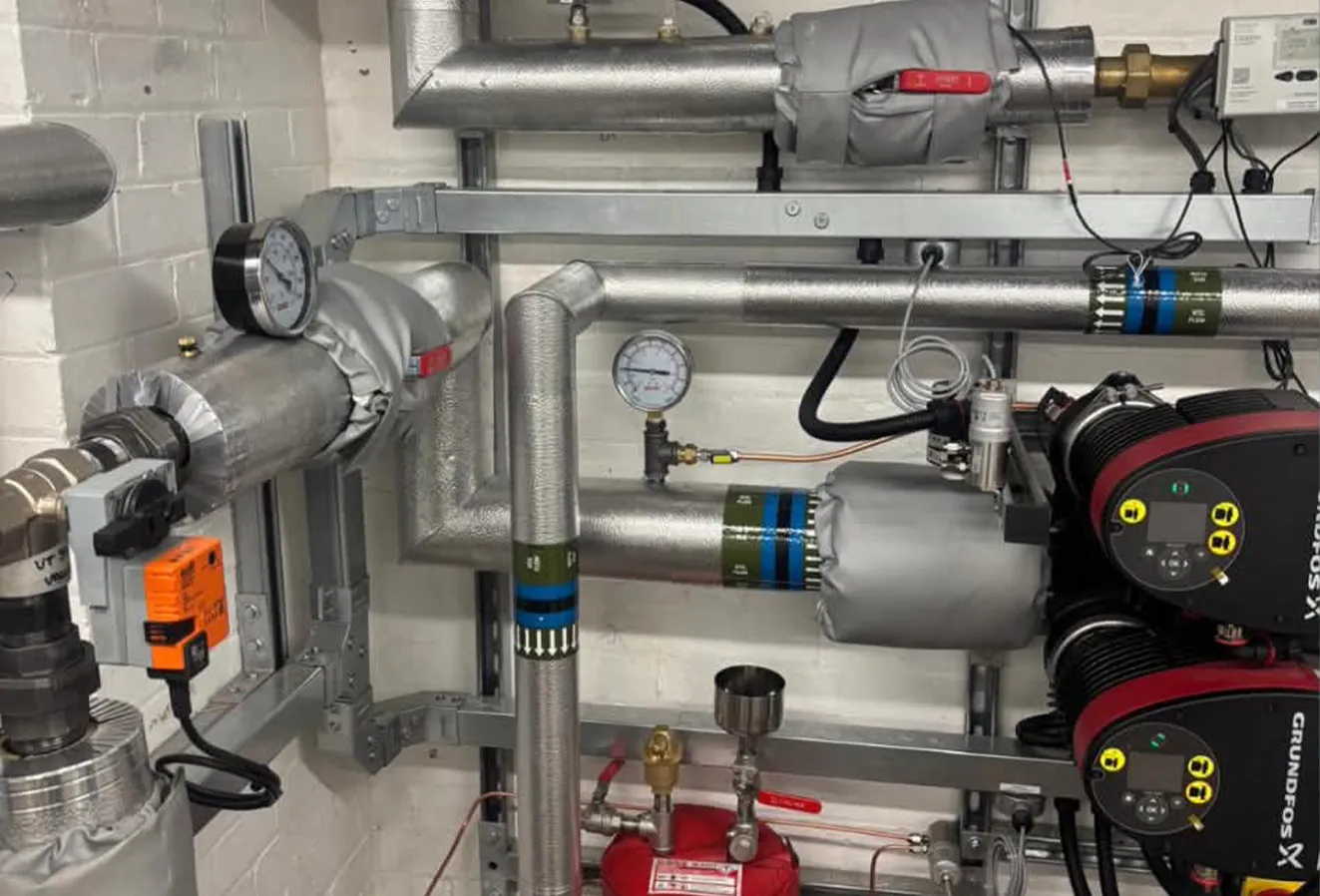
Heat pumps are now a realistic option for many commercial and public buildings, and plenty of organisations are under pressure to move away from gas. But a heat pump is not a straight swap for a boiler. Whether it will work well depends far more on the building than on the heat pump itself.
These are the questions we look at first when someone asks us about switching.
How much heat does the building lose?
Heat pumps work best at a steady, moderate output. A building that leaks heat through single glazing, uninsulated roofs and draughty doors needs a lot of energy to keep warm, and that makes any heating system expensive to run. Improving the building fabric first can reduce the size, and the cost, of the heat pump you need.
What flow temperature does the system need?
Most older boiler systems were designed to run at high water temperatures, often 70°C or more. Heat pumps are most efficient at lower temperatures. If the radiators can keep the building warm at a lower flow temperature, a heat pump will run efficiently. If not, some emitters may need upsizing, or a hybrid system with a boiler for the coldest days may make more sense.
Are the radiators and pipework up to it?
Lower water temperatures mean each radiator gives out less heat. We check whether the existing emitters can still do the job, and whether the pipework can carry the higher flow rates a heat pump system usually needs.
Is there enough electrical capacity?
A commercial heat pump installation can add a significant load to a building’s electrical supply. It is worth checking early whether the supply needs upgrading, because that can affect both the cost and the programme.
Where will the plant go?
Air source heat pumps need outdoor space with good airflow, and the plant room may need buffer tanks, pumps and controls. Noise, planning and, for listed buildings, the visual impact all need thinking about at the design stage.
Is there waste heat you can use?
Some buildings produce heat they currently throw away, from processes, cooling plant or equipment. Recovering it can make a heat pump system far more efficient. We did exactly that in a plant room upgrade with waste heat recovery, and on a larger scale at Blackley Crematorium, where heat from the cremator now helps heat the building.
Keeping the building running during the switch
Moving from boilers to heat pumps usually means a period where the old plant is out and the new system is being commissioned. A temporary boiler from our sister company, Boiler Hire UK, keeps the heating on while the work is done.
Thinking about a heat pump?
We can survey your building, look at the heat loss, the existing system and the electrical supply, and give you an honest view on whether a heat pump, a hybrid system or a new high-efficiency boiler is the right choice. Get in touch to arrange a visit.
