

Our Latest News & Updates
Hot Water Safety in Care Homes and Healthcare Buildings
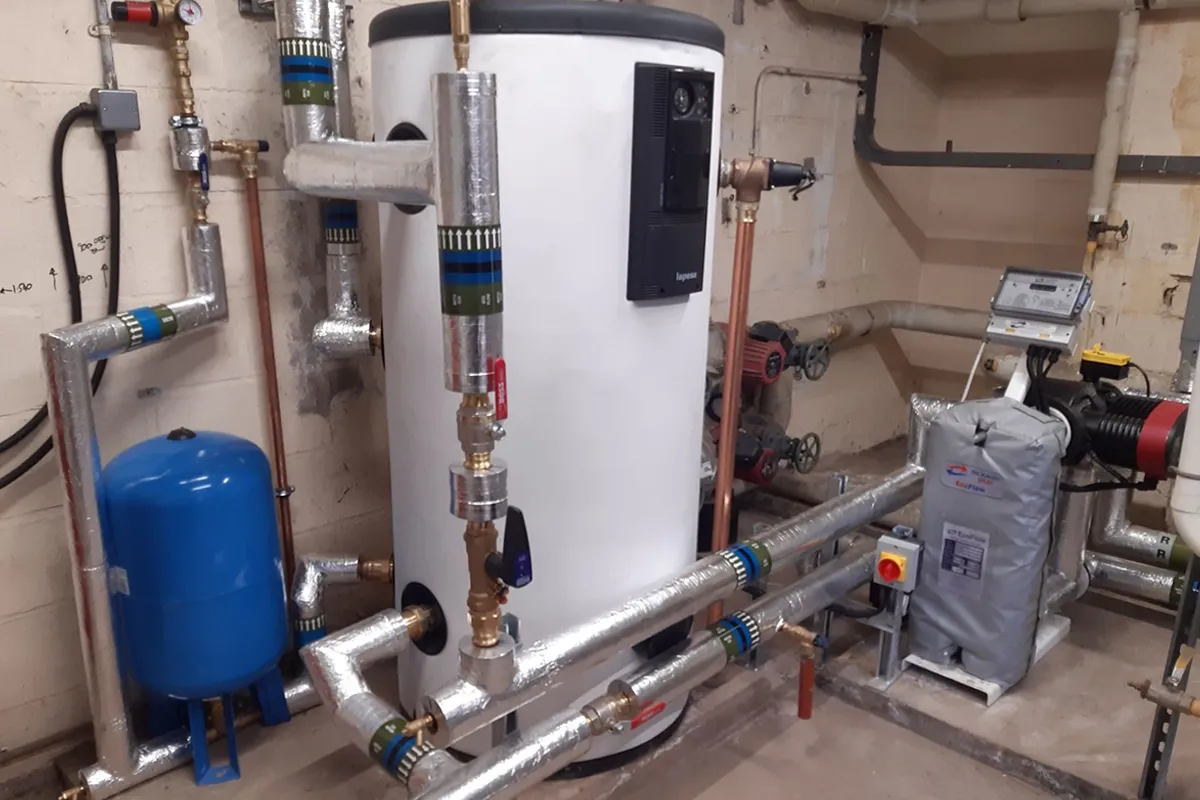
Hot water in a care home, surgery or hospital has to do two things that pull in opposite directions. It has to be hot enough to control legionella bacteria, and safe enough not to scald the people using it. Getting both right is a design question, a maintenance question and, under health and safety law, a duty for whoever runs the building.
Hot enough to control legionella
The Health and Safety Executive’s guidance on hot and cold water systems says hot water should be stored at 60°C or above, and distributed so that it reaches at least 50°C at outlets within one minute. In healthcare premises the distribution figure rises to 55°C.
Legionella grows best in water between 20°C and 45°C, so stored water that drops below temperature, outlets that are rarely used and dead legs in the pipework are all risks.
Safe enough not to scald
At those temperatures water can scald, and older residents, people with reduced mobility or sensation, and young children are most at risk. HSE guidance for health and social care says water for baths and showers should not exceed 44°C where people are at risk, and that thermostatic mixing valves (TMVs) should be fitted to make sure of it. For wash hand basins the risk is lower, but where someone is assessed as vulnerable, controls such as TMVs should be in place.
How a good system does both
The answer is to keep the water hot where it is stored and circulated, then blend it down to a safe temperature as close as possible to the point of use. In practice that means:
- water heaters or calorifiers sized to hold 60°C through the busiest part of the day
- circulation that keeps hot water moving, so it reaches temperature quickly at every outlet
- TMVs at baths, showers and, where needed, basins, fitted close to the outlet
- no dead legs, and a routine for flushing outlets that are not used often
Maintenance matters as much as design
A TMV that is not maintained can fail in either direction: too hot and it scalds, too cool and it encourages bacterial growth. HSE says outlet temperatures and TMVs should be monitored and maintained so the controls stay effective, and temperatures should be checked and recorded as part of the building’s legionella risk assessment.
Replacing water heaters without losing hot water
Older water heaters can struggle to hold temperature at peak demand, which is a safety issue as well as a comfort one. When plant reaches the end of its life we design and install the replacement, as we did when replacing two ageing water heaters in Nuneaton. Where a building cannot go without hot water during the changeover, our sister company Boiler Hire UK can supply a temporary hot water unit so the supply never stops.
Talk to us
We work on heating and hot water in hospitals, care homes and healthcare buildings. See our healthcare page or get in touch. Call 01782 274537.
This article is a general overview. Always follow your own legionella risk assessment and the current HSE guidance.
